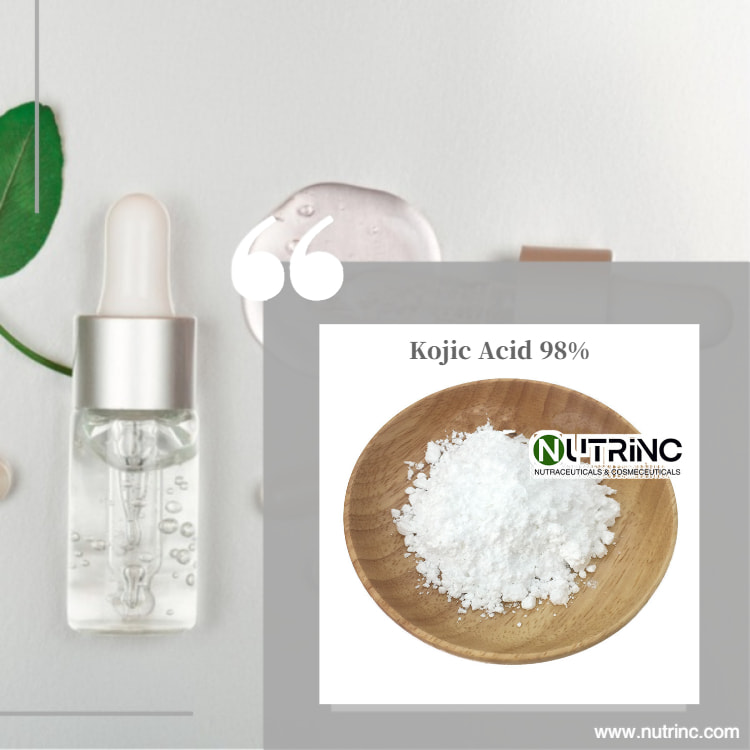
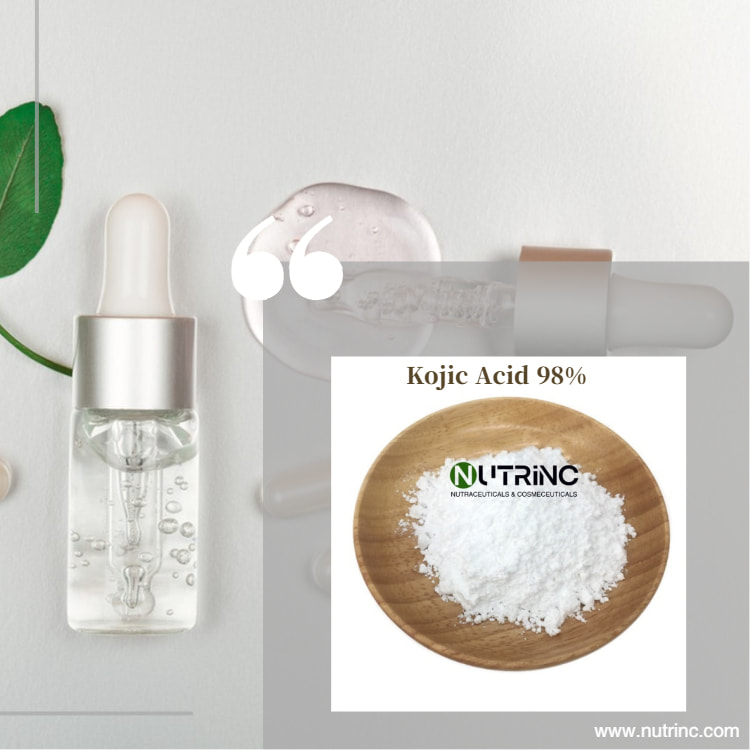







Kojic Acid
It is a melanin specific inhibitor, soluble in water, soluble in acetone and ethanol, slightly soluble in ether,
ethyl acetate, chloroform and pyridine, insoluble in benzene
Mainly used for skin whitening products, anti-aging products, sunscreen products, whitening facial cleanser and beauty cosmetics,
the dosage forms are cream, lotion, emulsion, soft film powder, mud glue, powder and so on
Name Kojic Acid
CAS number 501-30-4
Molecular weight 142.11
Density 1.5±0.1 g/cm3
Boiling point 401.7±45.0 °C at 760 mmHg
Molecular Formula C6H6O4
Melting point 152-155 °C(lit.)
Flash point 179.9±22.2 °C

Function of Kojic Acid
1.Inhibition of melanin production:
Kojic acid can inhibit the synthesis of tyrosinase, a key enzyme in the synthesis of melanin. By inhibiting tyrosinase, kojic acid strongly inhibits
the formation of melanin in the skin, helping to reduce problems such as dark spots, freckles, age spots, and hyperpigment
2.Whitening effect:
Because kojic acid can block the production of melanin, it is widely used in cosmetics to achieve whitening and lightening effects.
This whitening mechanism is different from that of hydroxy acid, which does not exfoliate keratinocytes and does not thin the cuticle .
3.Synergistic formula:
Kojic acid can be combined with other ingredients such as L-VC, azalea acid, etc., to enhance the whitening effect.
At the same time, when used with antioxidant ingredients such as vitamin E and SOD, the activity of kojic acid can be better maintained.
4.Skin moisturizing:
Kojic acid can be complexed with copper ions in the cells after entering the skin cells, changing the three-dimensional structure of tyrosinase,
preventing its activation, thereby inhibiting the formation of melanin.
In addition, kojic acid can also enter the intercellular substance and form intercellular glia,
which plays a role in water retention and increasing skin elasticity.
Safety:
The added concentration of kojic acid in cosmetics is generally between 0.5 and 2.0%,
and such a concentration is safe. However, too high a concentration may cause skin irritation and allergic reaction .