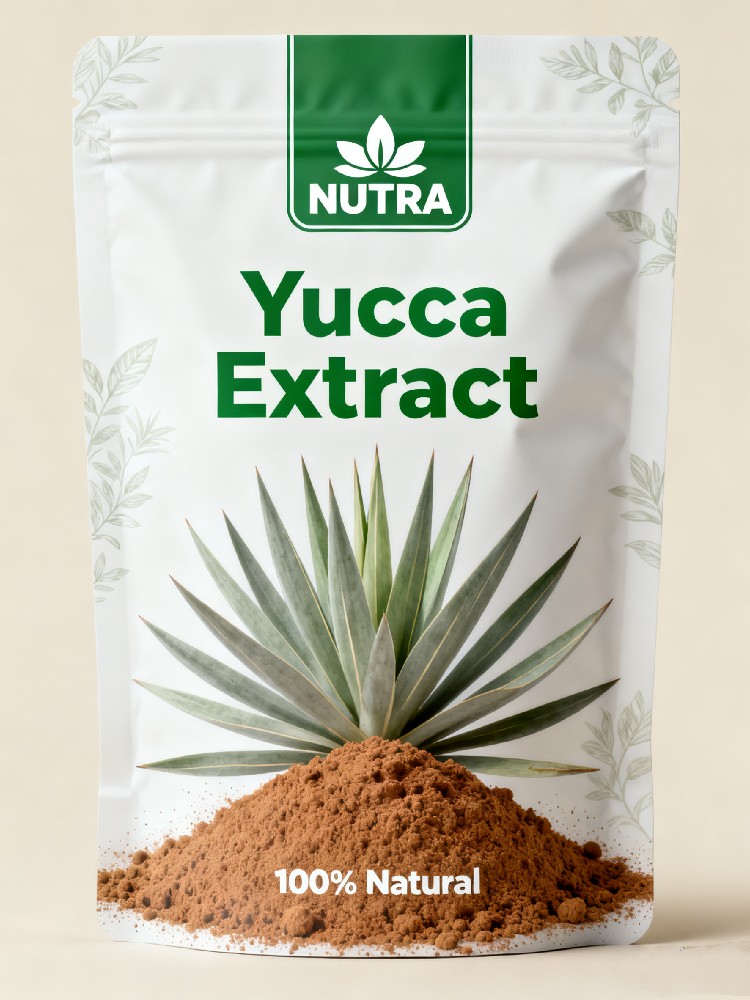
Yucca Extract Yucca Saponins 30%
saponin is one of the main components of yucca extract, which comes from Yucca genus of agave family
and is mainly distributed in the desert areas of the southwestern United States and northern Mexico.
The main components of yucca extract are steroidal saponin (sassafogenin, Sarsaparin, tegonogenin), free saponin, hecogenin and carbohydrate complex, etc.
Steroid saponins are a part of yucca saponins. These components constitute the special chemical structure of yucca saponins,
and their special physiological structure makes them have a variety of functions
Function and application
1. Improve protein utilization:
As a steroid substance, yucca saponins have strong surface activity and can improve the permeability of cell membrane.
It can bind to cholesterol on the cell membrane of the animal intestinal epithelium to form an insoluble substance and create a small hole in the cell membrane with a diameter of about 50 angstroms (5nm) 3, which allows large nutrient molecules to pass through the cell membrane into the cytoplasm,
thereby improving the absorption of nutrients such as amino acids.
2. Improve intestinal health:
Yucca saponins can change intestinal villi structure and mucosal thickness, increase nutrient absorption area, and reduce membrane surface tension .
In addition, it can also bind to compounds similar to cholesterol structure on the surface of bacteria,
increase the permeability of bacterial cell wall and membrane, promote the secretion of exogenous enzymes,
and thus accelerate the degradation of macromolecules around bacteria.
3. Improve body disease resistance:
Yucca saponins have immunostimulating activity, promote the production of antibodies, induce the production of insulin,
interferon and other cytokines, and mediate immune stimulating response. It may also interact with antigen-presenting cells to induce an immune response.
4. Bacteriostatic Antigenites:
Yucca saponins have broad-spectrum antibacterial effect and inhibit many kinds of pathogenic bacteria, including Staphylococcus aureus hemolyticus,
streptococcus hemolyticus, diplococcus pneumoniae and Bacillus dysenteriae. It also has antigenic and anti-nematode activities, which can regulate the rumen microbial community.
5. Regulating intestinal mucosa:
Yucca saponins can form complexes with cholesterol on intestinal epithelial cell membrane, affect the permeability of cell membrane,
facilitate the transport of active nutrients, and promote the absorption of nutrient factors.
6. Other functions:
Yucca saponins can also reduce the content of cholesterol in eggs, regulate rumen fermentation, reduce the stillbirth of pigs,
and reduce the proportion of carcass fat. In addition, it is used as a vaccine adjuvant to increase the permeability of intestinal mucosal cells
and help the absorption of nutrient factors that would otherwise not pass through the intestinal wall.