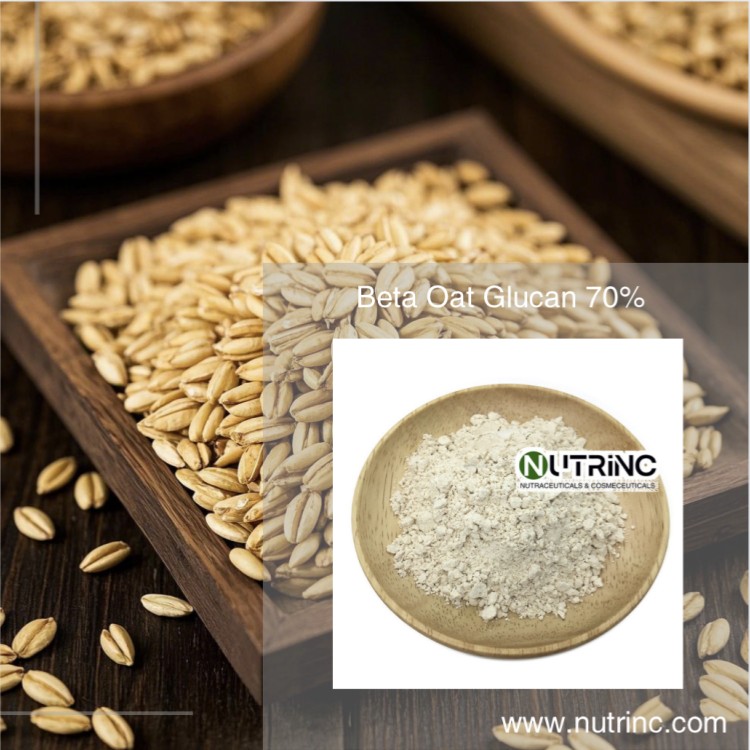
β-(1→ 3,1 →4) glucan in oat is a non-starch polysaccharide present in the endosperm and aleurone cell wall. It is a high polymer formed from the monomer β-D-glucopyranose, linked by β-(1→3) and β-(1→4) glycosidic bonds. The distribution of β-(1→3) and β-(1→4) glucoside bonds was not completely ordered and not completely metacomeric, mainly the cellotriose or cellotetraose of β-(1→4) glucoside bonds. More than 85% of oat β-glucan molecules had a β-(1→3) glucoside bond connection. 15% is composed of a long chain beta -(1→4) glycosidic bond separated by one beta -(1→3) glycosidic bond, which may have 4, 5 or 8 glucose residues in length. With beta - (1 - > 3) key straight chain without branch of polysaccharide structure, including beta - (1-4) and beta - (1 - > 3) glycosidic bond of ratio of about 2.4:1. In oat endosperm and aleurone cell wall components, β-glucan accounted for more than 85%. Oat β-glucan is a short chain glucan with low relative molecular weight, and its relative molecular weight varies from 5300 to 257200.
Oat beta-glucan is a non-starch polysaccharide present in the cell wall of oat endosperm and aleurone layer, which has a variety of beneficial functions for the human body:
1. Boost immunity:
In particular, enhance the vitality of macrophages, quickly kill invading viruses, bacteria, fungi and other pathogenic microorganisms, and help stay away from infectious diseases such as colds.
2. Regulate blood sugar:
The high viscosity of β-glucan can inhibit the emptying of the stomach and delay the absorption of glucose by the small intestine, thus effectively delaying the rise of postprandial blood sugar, and has a certain inhibition and prevention effect on diabetes.
3 Protect the gut:
Beta-glucan ferments in the large intestine to produce short-chain fatty acids, inhibits spoilage bacteria, promotes probiotics, maintains intestinal flora balance, and prevents diarrhea or constipation.
4. Lower cholesterol:
As early as 1963, it was discovered that oat bread, which replaces regular bread, can lower LDL cholesterol. American expert research shows that a patient with hyperlipemia takes 3 to 4 grams of beta-glucan per day, which can reduce "bad cholesterol" by 8%. And for every 100 grams of oats, we can basically absorb 6 to 8 grams of beta-glucan.
5. Anti-cancer:
β-glucan can kill malignant cells such as sarcoma cells and melanocytes, and the inhibition rate of liver cancer and breast cancer can be comparable to that of anti-cancer drugs, and there is no toxic side effect, so it has a certain anti-cancer work.