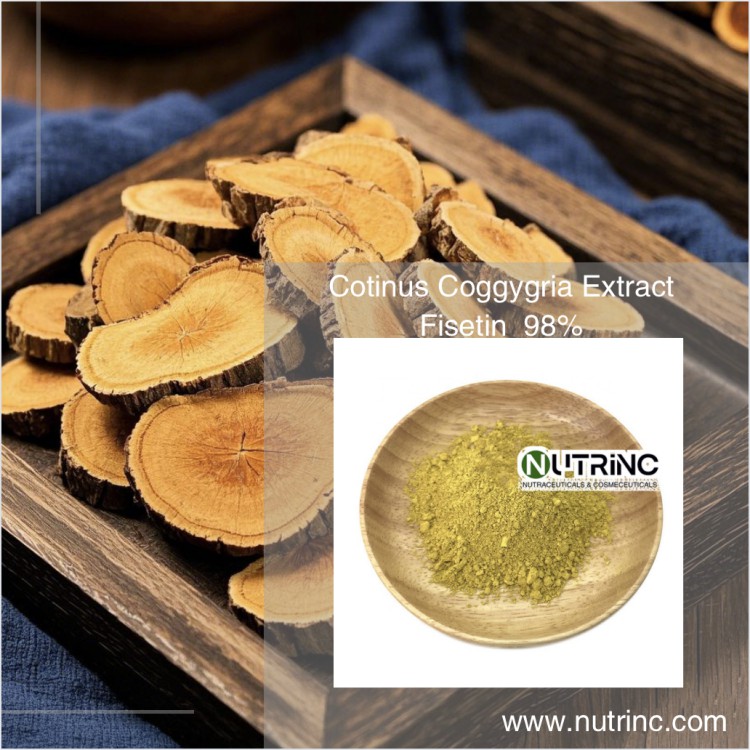
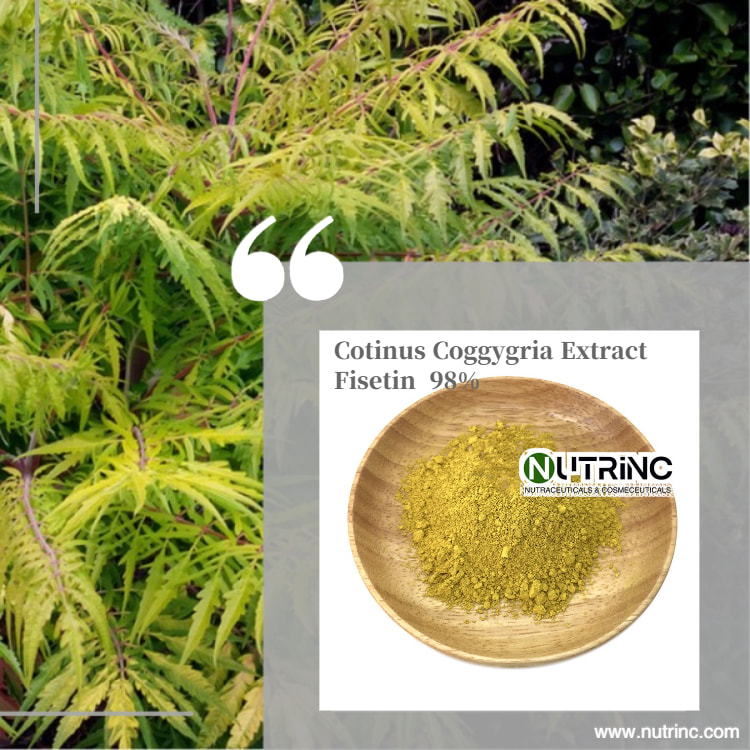
Fisetin extract of Rhus succedanea L,
Fisetin
CAS number 528-48-3
Molecular weight 286.236
Density 1.7±0.1 g/cm3
Boiling point 599.4±50.0 °C at 760 mmHg
Molecular formula C15H10O6
Melting point 330ºC
Flash point 233.0±23.6 °C
The Function of Fisetin
1. Antioxidant effect
1. Scavenging free radicals:
Fisetin can directly remove free radicals, free radicals are atoms or molecules with unpaired electrons produced by the body in the normal metabolic process or by the external environment (such as pollution, radiation, etc.), they will cause damage to cells, and urushetin can reduce this damage.
2. Boost glutathione levels:
It helps boost levels of glutathione, a substance that plays a key role in the body's antioxidant defense system, helping maintain the normal function and structure of cells and resisting oxidative stress.
3. Maintain REDOX homeostasis:
May help regulate the production of many proteins involved in protecting the body from oxidative stress and maintaining REDOX homeostasis, which maintains a balance between the rate of free radical production and the rate of clearance of various antioxidants.
4. Anti-inflammatory effect
Urushiflavin has anti-inflammatory pharmacological properties that can help reduce the body's inflammatory response. Inflammation is one of the body's immune responses, but excessive inflammatory response will cause adverse effects on the body, such as causing pain, tissue damage, etc. Urushlutein can regulate inflammation and reduce related symptoms.
5. Anti-aging effect
1. Effects on cell aging:
Studies in rodents have shown that it may reduce the number of senescent cells in tissues and is considered an aging drug with potential role in fighting aging.
2. Protect nerves and memory:
It can protect nerves, help maintain memory, and inhibit the formation of plaques around synapses, which helps to resist brain aging, and has positive significance in preventing amyloid plaques in the aging brain. Eating more vegetables and fruits rich in urushetin can help prevent problems related to brain aging.
3. Anti-tumor effect
1. Inducing tumor cell apoptosis:
It can exert anti-tumor effect by affecting the signal transduction pathway of tumor cells, thus inhibiting the growth and spread of tumor cells.
2. Inhibit tumor cell proliferation:
To inhibit the proliferation of tumor cells and prevent the continuous division and growth of tumor cells, urushetin can interfere with the proliferation process of tumor cells from multiple links.
3. Inhibit tumor cell migration and invasion:
It can inhibit the migration and invasion ability of tumor cells and prevent tumor cells from spreading from the primary lesion to other sites to form metastases.
5. Other effects
Enzyme inhibition:
1. It can inhibit the total sugar reductase in rat lens
2. Spasmolytic action:
The antispasmodic effect of acetylcholine was studied in small intestine specimens of mice.
3. Anticoagulant and antithrombotic effects:
Flavonoids are one of the main components of plants containing urushiflavin (such as cotinus), which have obvious anticoagulant and antithrombotic effects.
4. Repair liver damage:
The components of the plant from which urushetin originated (such as cotinus) have obvious protective and repairing effects on the liver injury caused by hepatitis, and can significantly improve the activity of immune cells and immune organ function.
5. Promote hair growth:
There have been many reports on the effect of the leaf extract of plants containing urushiflavin (such as cotinus) on hair growth, and its water body also has a certain protective effect on skin and mucous membrane. The mechanism of action may be that the extract induces hair growth factors, thereby regulating hair growth and growth cycle